Al Masjid an Nabawi Medina: Complete Guide to the Prophet’s Mosque
Al Masjid an Nabawi is one of the most sacred and beloved places in Islam. Located in the city of Medina, Saudi Arabia, this magnificent mosque holds a special place in the hearts of Muslims around the world. It was established by Prophet Muhammad ﷺ himself after his migration (Hijrah) from Makkah to Medina, making it one of the earliest and most historically significant mosques in Islamic history.
Table of Contents
Today, Al Masjid an Nabawi Medina is recognized as the second holiest mosque in Islam, after Masjid al-Haram in Makkah. Millions of Muslims visit this blessed mosque every year to pray, reflect, and send peace and blessings upon the Prophet Muhammad ﷺ. The mosque is also home to many important Islamic landmarks, including the Rawdah Sharif, a place described by the Prophet as one of the gardens of Paradise.
For many believers, visiting Al Masjid an Nabawi is a deeply spiritual experience. Pilgrims traveling for Hajj or Umrah often include Medina in their journey so they can pray in the Prophet’s Mosque and visit the resting place of Prophet Muhammad ﷺ. The peaceful atmosphere of the mosque and the connection to the life of the Prophet make it a place of reflection, gratitude, and devotion.
In this guide, you will learn about the history of Al Masjid an Nabawi, its spiritual importance in Islam, the famous landmarks inside the mosque, and helpful information for pilgrims planning to visit this sacred place in Medina.
What Is Al Masjid an Nabawi?
Al Masjid an Nabawi is one of the most important and sacred mosques in Islam. It was established by Prophet Muhammad ﷺ in the city of Medina after his migration from Makkah in 622 CE. The mosque quickly became the center of the Muslim community, serving not only as a place of prayer but also as a gathering place for learning, guidance, and community affairs.
Today, Al Masjid an Nabawi Medina stands as one of the largest and most visited mosques in the world. Millions of Muslims travel to Medina every year to pray in this blessed mosque and to send peace and blessings upon the Prophet Muhammad ﷺ.
Meaning of Al Masjid an Nabawi
The name Al Masjid an Nabawi comes from Arabic and translates to “The Prophet’s Mosque.” The term reflects its deep connection to Prophet Muhammad ﷺ, who personally participated in building the mosque and spent much of his life there after migrating to Medina.
Because of this strong historical and spiritual connection, the mosque holds a special place in Islamic tradition and in the hearts of Muslims worldwide.
Location of Al Masjid an Nabawi
Al Masjid an Nabawi is located in the city of Medina (Al-Madinah Al-Munawwarah) in Saudi Arabia. Medina is the second holiest city in Islam after Makkah and holds great historical importance in the life of Prophet Muhammad ﷺ.
The mosque stands at the center of Medina and is surrounded by hotels, markets, and facilities that serve the millions of pilgrims who visit the city each year. Its location also marks the place where the Prophet lived and where many significant events in early Islamic history took place.
Why It Is One of the Holiest Mosques in Islam
Al Masjid an Nabawi is considered the second holiest mosque in Islam, after Masjid al-Haram in Makkah. The mosque holds special spiritual significance because it was built by Prophet Muhammad ﷺ and contains his blessed resting place.
Praying in the Prophet’s Mosque carries great reward. The Prophet Muhammad ﷺ said:
“One prayer in my mosque is better than one thousand prayers elsewhere, except for Masjid al-Haram.”
(Sahih al-Bukhari, Sahih Muslim)
Because of this immense reward and its deep connection to the life of the Prophet ﷺ, Muslims from around the world long to visit Al Masjid an Nabawi Medina and experience its peaceful and spiritual atmosphere.
History of Al Masjid an Nabawi
The history of Al Masjid an Nabawi is closely connected to the life of Prophet Muhammad ﷺ and the early development of the Muslim community. From a simple structure built with natural materials to one of the largest mosques in the world today, the Prophet’s Mosque has gone through many stages of expansion while preserving its deep spiritual significance.
Over the centuries, Muslim leaders and rulers have carefully expanded and maintained the mosque to accommodate the growing number of visitors who travel to Al Masjid an Nabawi Medina.
The Arrival of Prophet Muhammad in Medina
The story of Al Masjid an Nabawi begins with the historic Hijrah, when Prophet Muhammad ﷺ migrated from Makkah to Medina in 622 CE. This migration marked a turning point in Islamic history, as it allowed the Muslim community to practice their faith freely and establish a strong foundation for the new society.
When the Prophet ﷺ arrived in Medina, he allowed his camel to walk freely until it stopped at a specific piece of land. The Prophet ﷺ said:
“Let it go, for it is commanded.”
(Reported in the books of Seerah)
The camel eventually sat on land that belonged to two orphan boys from the Banu Najjar tribe. The Prophet ﷺ purchased the land from them so that a mosque could be built there.
Construction of the First Mosque
After purchasing the land, the Prophet Muhammad ﷺ began building Al Masjid an Nabawi together with his companions. The Prophet ﷺ personally participated in the construction, carrying bricks and working alongside the early Muslims.
The companions recited words of remembrance while building the mosque, and the Prophet ﷺ joined them, saying:
“O Allah, there is no life except the life of the Hereafter, so forgive the Ansar and the Muhajirin.”
(Sahih al-Bukhari)
This mosque soon became the center of the Muslim community. It was not only a place of prayer but also a place where the Prophet ﷺ taught the Quran, settled community matters, and guided the believers.
Early Structure of the Mosque
The original structure of Al Masjid an Nabawi was very simple and reflected the humility of the early Muslim community. The walls were built with mud bricks, and the roof was supported by palm tree trunks. Palm branches were used to create shade from the sun, and the floor was covered with sand and small stones.
Despite its simple construction, the mosque became one of the most spiritually significant places in Islam. Close to the mosque were small rooms built for the wives of the Prophet ﷺ. One of these rooms later became the place where the Prophet ﷺ was buried.
Expansions by Islamic Caliphs
As Islam spread and the number of Muslims increased, the mosque needed to be expanded to accommodate more worshippers.
During the rule of Umar ibn Al-Khattab (RA), the mosque was expanded to provide more space for prayer while maintaining the simplicity of its design.
Later, Uthman ibn Affan (RA) carried out another expansion using stronger materials such as carved stones and wood. These improvements strengthened the mosque while preserving its sacred atmosphere.
These expansions reflected the companions’ deep respect for Al Masjid an Nabawi, ensuring that the mosque could continue serving the growing Muslim community.
Ottoman and Saudi Expansions
Over the centuries, Muslim rulers continued to care for and expand Al Masjid an Nabawi Medina. During the Ottoman era, major architectural improvements were introduced, including beautiful decorations and the famous Green Dome, which now stands above the resting place of Prophet Muhammad ﷺ.
In modern times, the Saudi government has undertaken several large expansion projects to accommodate the millions of pilgrims who visit Medina every year. These projects added large prayer areas, modern facilities, and advanced infrastructure while preserving the historic and sacred areas of the mosque.
Today, Al Masjid an Nabawi stands as one of the largest mosques in the world. Yet despite its size and modern features, the mosque continues to hold the same spiritual legacy that began when the Prophet Muhammad ﷺ and his companions first built it more than fourteen centuries ago.
The Green Dome of Al Masjid an Nabawi
One of the most recognizable landmarks of Al Masjid an Nabawi is the famous Green Dome, which stands above the resting place of Prophet Muhammad ﷺ in Medina. For many Muslims visiting Al Masjid an Nabawi Medina, the sight of this dome carries deep spiritual meaning and reminds them of their connection to the life and teachings of the Prophet ﷺ.
Although the mosque has been expanded and renovated many times throughout history, the Green Dome remains one of the most symbolic features of the Prophet’s Mosque.
What Is the Green Dome?
The Green Dome is the dome located above the chamber that contains the tomb of Prophet Muhammad ﷺ. Inside this chamber are also the graves of two of the Prophet’s closest companions: Abu Bakr As-Siddiq (RA) and Umar ibn Al-Khattab (RA).
Originally, the Prophet ﷺ was buried in the room of his wife Aisha (RA), which was located next to the mosque. Over time, as Al Masjid an Nabawi expanded, this room became enclosed within the mosque structure.
Today, the Green Dome marks the location of this sacred chamber, making it one of the most well-known landmarks in Medina.
History of the Green Dome
The Green Dome was not part of the original mosque built by Prophet Muhammad ﷺ. In the early centuries of Islam, the chamber where the Prophet ﷺ was buried did not have a dome.
The first dome over the chamber was built during the Mamluk period in the 13th century. Initially, it was constructed using wood and covered with lead sheets for protection.
The dome was later rebuilt and renovated several times throughout history. It was eventually painted green during the Ottoman period in the 19th century, which is why it is now widely known as the Green Dome.
Since then, the dome has become one of the most iconic symbols of Al Masjid an Nabawi Medina.
Spiritual Significance for Muslims
For Muslims around the world, the Green Dome represents a deep spiritual connection to Prophet Muhammad ﷺ. While the dome itself is a historical architectural feature, the area beneath it holds great importance because it contains the resting place of the Prophet ﷺ.
When Muslims visit Al Masjid an Nabawi, they often stand near the area facing the Prophet’s chamber to send peace and blessings upon him.
The Prophet Muhammad ﷺ taught Muslims to send greetings of peace upon him, saying:
“No one sends greetings upon me except that Allah returns my soul to me so that I may respond to his greeting.”
(Sunan Abu Dawood)
For this reason, visiting the Prophet’s Mosque and sending salutations (Salam) upon the Prophet ﷺ is a deeply meaningful moment for many believers. The Green Dome therefore serves as a powerful reminder of the life, message, and legacy of the Prophet Muhammad ﷺ.
The Rawdah – One of the Gardens of Paradise
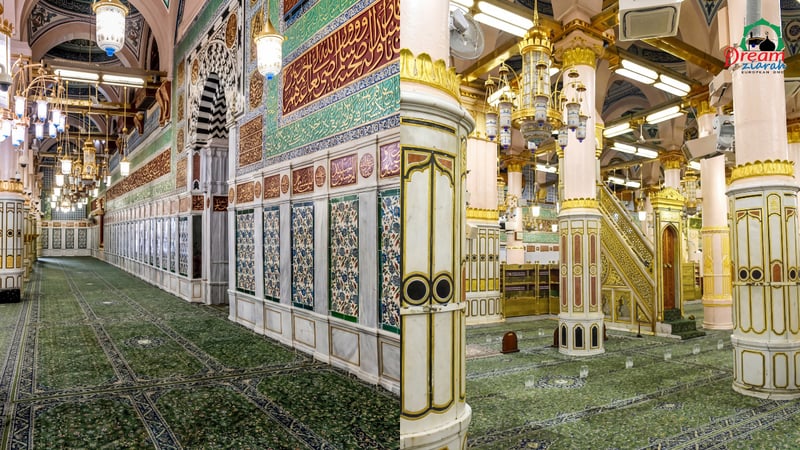
Among the most sacred areas inside Al Masjid an Nabawi is a special place known as Rawdah (Rawdah Sharif). For many Muslims visiting Al Masjid an Nabawi Medina, praying in this blessed area is one of the most meaningful moments of their journey. The Rawdah holds deep spiritual importance because it is directly connected to the life and worship of Prophet Muhammad ﷺ.
Muslims believe that worship performed in this area carries great spiritual value, as it was a place where the Prophet ﷺ prayed, taught his companions, and guided the early Muslim community.
What Is Rawdah in Al Masjid an Nabawi?
The Rawdah is the area located between the house of Prophet Muhammad ﷺ (where he is buried today) and his pulpit (Minbar) inside the Prophet’s Mosque. This space is easily recognized by its distinctive green carpet, which distinguishes it from the rest of the mosque’s red carpets.
Historically, this area was part of the original mosque built by the Prophet ﷺ and served as a place where he prayed and addressed his companions. Because of its unique connection to the Prophet ﷺ, the Rawdah is considered one of the most spiritually significant areas within Al Masjid an Nabawi.
Hadith About Rawdah
The special status of the Rawdah is mentioned in an authentic hadith of the Prophet Muhammad ﷺ. He said:
“Between my house and my pulpit is a garden from the gardens of Paradise.”
(Sahih al-Bukhari, Sahih Muslim)
Because of this hadith, Muslims refer to this area as Rawdah, which means garden. Many scholars explain that this statement highlights the great spiritual blessings associated with praying in this place.
For pilgrims visiting Al Masjid an Nabawi Medina, praying in Rawdah is therefore considered a very special opportunity.
How to Pray in Rawdah
Due to the large number of visitors to the Prophet’s Mosque, access to the Rawdah is organized through a regulated visiting system. Pilgrims usually need to book a time slot using the Nusuk app, which helps manage the flow of visitors and reduce crowding.
Once inside the Rawdah area, pilgrims may perform two units of voluntary prayer (nafl) and spend time making supplications and remembering Allah.
Because of the high demand to pray in this blessed area, visitors are encouraged to remain calm, patient, and respectful of others while inside Rawdah. For many Muslims, praying in Rawdah becomes one of the most memorable and spiritual moments of their visit to Al Masjid an Nabawi.
The Tomb of Prophet Muhammad ﷺ
One of the most spiritually significant places inside Al Masjid an Nabawi Medina is the resting place of Prophet Muhammad ﷺ. For Muslims visiting the Prophet’s Mosque, sending peace and blessings upon the Prophet ﷺ near his resting place is a deeply emotional and meaningful moment.
Although visiting the tomb is not a required part of Hajj or Umrah, many pilgrims visit Al Masjid an Nabawi to offer their greetings and express their love and respect for the Prophet ﷺ.
Location of the Prophet’s Tomb
The tomb of Prophet Muhammad ﷺ is located inside Al Masjid an Nabawi, within a chamber that was originally the room of his wife Aisha (RA). After the Prophet ﷺ passed away in 632 CE, he was buried in this room according to the Islamic tradition that prophets are buried where they pass away.
Over time, as Al Masjid an Nabawi expanded, the chamber became enclosed within the mosque structure. Today, the area is surrounded by protective walls and a decorative enclosure, and it lies beneath the famous Green Dome.
Who Is Buried Next to the Prophet
Two of the Prophet’s closest companions and the first two Rightly Guided Caliphs are also buried in the same chamber.
Abu Bakr As-Siddiq (RA)
Abu Bakr (RA) was the closest companion and the first caliph after the Prophet ﷺ. He is buried next to the Prophet ﷺ as a sign of his close relationship and leadership in the early Muslim community.
Umar ibn Al-Khattab (RA)
Umar (RA), the second caliph of Islam, was also buried beside the Prophet ﷺ after his passing. He had earlier expressed the hope of being buried near the Prophet, and this wish was granted with permission from Aisha (RA).
Etiquette When Visiting the Prophet’s Tomb
When visiting the resting place of Prophet Muhammad ﷺ, Muslims are encouraged to observe proper manners and respect.
Pilgrims typically stand near the area facing the chamber and offer greetings of peace by saying:
“As-salamu ‘alayka ya Rasul Allah”
(Peace be upon you, O Messenger of Allah)
After sending salutations to the Prophet ﷺ, visitors may also send greetings to Abu Bakr (RA) and Umar (RA).
The Prophet ﷺ encouraged Muslims to send blessings upon him, saying:
“Send blessings upon me, for your blessings are presented to me wherever you are.”
(Sunan Abu Dawood)
Visitors are advised to remain calm, respectful, and avoid pushing or raising their voices. Visiting the Prophet’s Mosque and sending salutations upon the Prophet ﷺ is considered a moment of reflection, gratitude, and love for the final messenger of Islam.
Architecture of Al Masjid an Nabawi
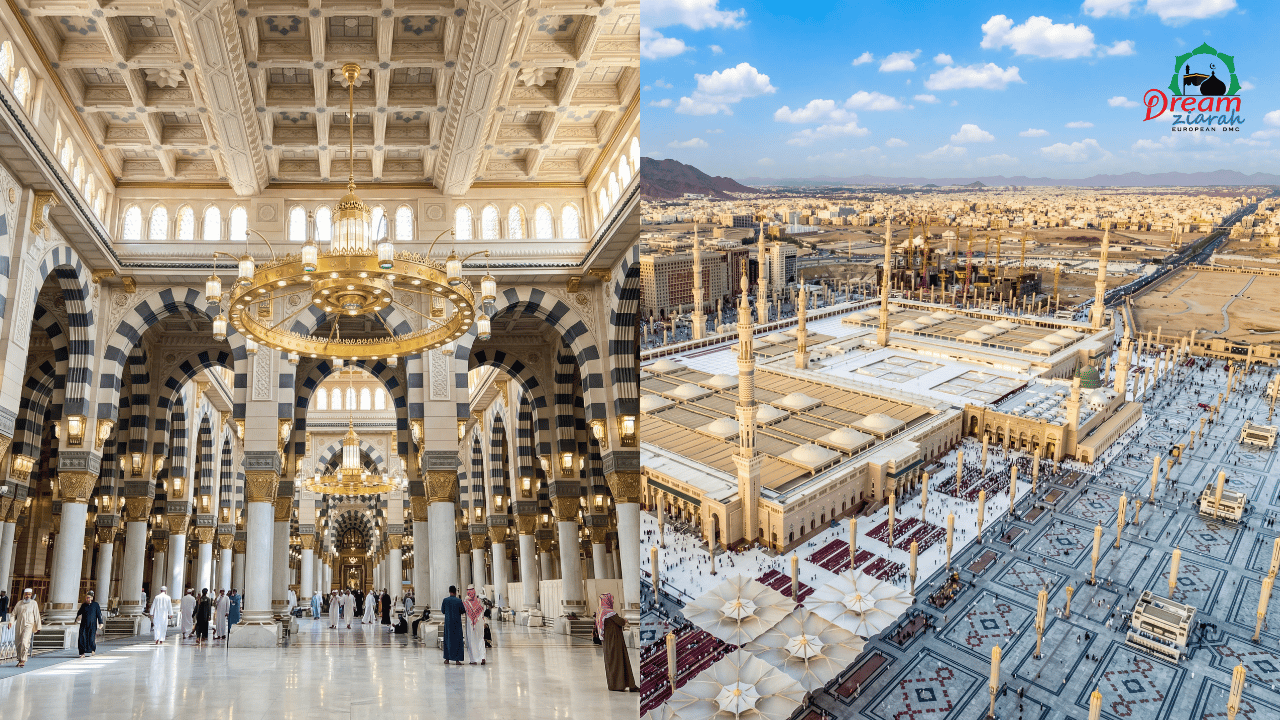
The architecture of Al Masjid an Nabawi Medina reflects both the deep history of Islam and the remarkable advancements made to serve millions of worshippers. From its humble beginnings as a simple mosque built with palm trunks and mud bricks, the Prophet’s Mosque has evolved into one of the most magnificent and largest mosques in the world.
Despite the many expansions and modern features, the mosque continues to preserve its spiritual atmosphere and its connection to the life of Prophet Muhammad ﷺ.
Size and Capacity of the Mosque
Today, Al Masjid an Nabawi is one of the largest mosques in the world. Over the centuries, several expansion projects have significantly increased its size to accommodate the growing number of pilgrims visiting Medina.
The mosque now covers a vast area and can accommodate more than one million worshippers during peak times. During the Hajj season and the holy month of Ramadan, the mosque becomes filled with believers from all over the world who gather to perform prayers in this blessed place.
The large prayer halls, open courtyards, and surrounding areas allow millions of Muslims to pray comfortably within the mosque complex.
The Famous Umbrellas of the Mosque
One of the most remarkable modern features of Al Masjid an Nabawi Medina is the series of giant retractable umbrellas located in the mosque’s courtyard. These umbrellas were designed to protect worshippers from the intense heat of the desert sun.
During the day, the umbrellas open to provide shade and maintain a comfortable environment for visitors. In the evening, they automatically close, creating an open and spacious courtyard.
These structures are not only functional but also beautifully designed, becoming one of the most recognizable architectural elements of the Prophet’s Mosque.
Minarets and Domes
Al Masjid an Nabawi features multiple minarets and domes that contribute to its impressive skyline. The mosque currently has several tall minarets that are used for the call to prayer (Adhan) and serve as distinctive architectural landmarks visible across the city of Medina.
The mosque also contains numerous domes across its roof, including the famous Green Dome, which stands above the resting place of Prophet Muhammad ﷺ. These domes add both beauty and historical significance to the mosque’s design.
Interior Design and Calligraphy
The interior of Al Masjid an Nabawi Medina is known for its elegant and peaceful design. The mosque features beautifully decorated columns, soft lighting, and intricate Islamic calligraphy.
Verses from the Quran are inscribed throughout the mosque in artistic calligraphic styles, reminding worshippers of the message of Islam. The carpets, chandeliers, and architectural details create an atmosphere of tranquility and reverence, allowing visitors to focus on prayer and reflection.
Together, these architectural features make Al Masjid an Nabawi not only a place of worship but also one of the most beautiful and spiritually uplifting mosques in the world.
Visiting Al Masjid an Nabawi
Visiting Al Masjid an Nabawi Medina is a deeply spiritual experience for Muslims around the world. The Prophet’s Mosque welcomes millions of worshippers every year who come to pray, reflect, and send peace and blessings upon Prophet Muhammad ﷺ. Whether pilgrims are visiting Medina during Hajj, Umrah, or a separate journey, preparing for the visit can help them make the most of their time in this blessed mosque.
Best Time to Visit the Mosque
Al Masjid an Nabawi is open throughout the day and night, allowing worshippers to visit and pray at any time. However, many visitors find certain times more peaceful and comfortable.
Early morning after Fajr prayer and late evening after Isha prayer are often considered some of the best times to visit the mosque. During these hours, the atmosphere is calmer, making it easier to pray, reflect, and spend time in remembrance of Allah.
During the holy month of Ramadan, the mosque becomes especially vibrant, with large gatherings of worshippers performing prayers and reciting the Quran.
Prayer Times in Al Masjid an Nabawi
Like all mosques, Al Masjid an Nabawi Medina follows the five daily Islamic prayers:
- Fajr (Dawn Prayer)
- Dhuhr (Midday Prayer)
- Asr (Afternoon Prayer)
- Maghrib (Sunset Prayer)
- Isha (Night Prayer)
The Adhan (call to prayer) is heard throughout the mosque complex and the surrounding areas of Medina. Many pilgrims try to arrive early for prayer times to secure a place inside the mosque.
The Prophet Muhammad ﷺ highlighted the great reward of praying in this mosque, saying:
“One prayer in my mosque is better than one thousand prayers elsewhere except Masjid al-Haram.”
(Sahih al-Bukhari, Sahih Muslim)
Dress Code for Visitors
Visitors to Al Masjid an Nabawi are expected to dress modestly in accordance with Islamic guidelines.
- Men usually wear modest clothing such as long trousers and shirts, while many pilgrims also wear traditional garments like the thobe.
- Women are required to wear modest clothing that covers the body, including a headscarf (hijab).
Maintaining modest attire reflects the respect and reverence due to this sacred place of worship.
Entry Gates of the Mosque
Al Masjid an Nabawi Medina has many entrance gates located around the mosque complex, making it easy for pilgrims to enter from different directions.
Some gates are especially known because they lead directly to important areas inside the mosque, such as the entrance routes toward Rawdah Sharif. Clear signs and guidance from mosque staff help visitors navigate the mosque and find the appropriate prayer areas.
Because the mosque welcomes millions of visitors each year, these multiple gates help manage the flow of worshippers and ensure that everyone can enter and exit the mosque safely and smoothly.
Important Places Inside Al Masjid an Nabawi
Al Masjid an Nabawi Medina is not only a place of prayer but also a site filled with important historical and spiritual landmarks connected to the life of Prophet Muhammad ﷺ. Several areas inside the mosque hold special significance because they are directly related to the Prophet’s worship, teachings, and the early Muslim community.
For pilgrims visiting the Prophet’s Mosque, learning about these places can deepen their understanding of Islamic history and make their visit more meaningful.
One of the most sacred places inside Al Masjid an Nabawi is Rawdah Sharif. This blessed area lies between the house of Prophet Muhammad ﷺ and his pulpit (Minbar).
The Prophet ﷺ described this place with the famous words:
“Between my house and my pulpit is a garden from the gardens of Paradise.”
(Sahih al-Bukhari, Sahih Muslim)
Because of this hadith, Muslims consider praying in Rawdah a very special opportunity. The area is marked by its green carpet, which distinguishes it from the rest of the mosque’s red carpets.
Minbar of the Prophet
The Minbar (pulpit) of Prophet Muhammad ﷺ is another important feature inside Al Masjid an Nabawi Medina. The Prophet ﷺ used this elevated platform to deliver sermons and address the Muslim community.
Originally, the Prophet ﷺ delivered sermons while leaning against a palm tree trunk. Later, a companion suggested building a wooden pulpit so that the Prophet could speak more comfortably to the growing congregation.
According to authentic narrations, when the new pulpit was built, the palm trunk that the Prophet ﷺ had used began to make a sound like crying until the Prophet ﷺ comforted it.
(Sahih al-Bukhari)
Today, the Minbar remains an important historical symbol of the Prophet’s leadership and teachings.
Mihrab of the Prophet
The Mihrab is the niche in the mosque wall that indicates the direction of Qiblah, the direction Muslims face when praying toward the Kaaba in Makkah.
Inside Al Masjid an Nabawi, there is a Mihrab associated with the place where Prophet Muhammad ﷺ used to lead prayers. This area holds great historical significance because it represents the location where the Prophet guided the companions in daily prayers.
Although the structure of the mosque has changed over time, this place remains an important reminder of the early days of the Muslim community.
Quba Direction and Historic Areas
Within Al Masjid an Nabawi Medina, there are also areas connected to important events in Islamic history. One of these directions points toward Masjid Quba, the first mosque built in Islam.
Prophet Muhammad ﷺ frequently visited Masjid Quba, and authentic narrations mention the reward associated with praying there.
“Whoever purifies himself in his house and then goes to Masjid Quba and prays in it will have a reward like that of Umrah.”
(Sunan Ibn Majah)
These historical connections remind visitors that Al Masjid an Nabawi was not only a place of prayer but also the center of the Prophet’s life, teaching, and community leadership in Medina.
The Spiritual Importance of Al Masjid an Nabawi
Al Masjid an Nabawi Medina holds a deeply special place in the hearts of Muslims around the world. It is not only a magnificent mosque but also a place closely connected to the life, teachings, and legacy of Prophet Muhammad ﷺ. For believers, visiting this blessed mosque is a moment of spiritual reflection, gratitude, and love for the final messenger of Islam.
The peaceful atmosphere of the Prophet’s Mosque allows visitors to feel a unique connection to Islamic history and to strengthen their faith through prayer and remembrance of Allah.
Rewards of Praying in the Mosque
One of the reasons why Al Masjid an Nabawi is so important in Islam is the immense reward associated with praying there. The Prophet Muhammad ﷺ spoke about the special status of his mosque in an authentic hadith:
“One prayer in my mosque is better than one thousand prayers elsewhere except Masjid al-Haram.”
(Sahih al-Bukhari, Sahih Muslim)
This hadith highlights the great spiritual value of worship in the Prophet’s Mosque. Because of this extraordinary reward, many Muslims long for the opportunity to perform even a single prayer in Al Masjid an Nabawi Medina.
Why Muslims Visit Medina
Although visiting Medina is not a mandatory part of Hajj or Umrah, many pilgrims choose to travel to the city because of its deep connection to the life of the Prophet ﷺ.
Muslims visit Al Masjid an Nabawi to pray, reflect on Islamic history, and send peace and blessings upon the Prophet Muhammad ﷺ. The city of Medina is also home to many important historical sites related to the early Muslim community.
For believers, visiting Medina becomes a journey of spiritual reflection and gratitude for the guidance brought by the Prophet ﷺ.
Connection to the Life of Prophet Muhammad ﷺ
The entire history of Al Masjid an Nabawi is closely tied to the life of Prophet Muhammad ﷺ. After migrating to Medina during the Hijrah, the Prophet ﷺ built this mosque and made it the center of the Muslim community.
From this mosque, he led prayers, taught the Quran, delivered sermons, and guided the companions in matters of faith and daily life.
Today, when Muslims visit Al Masjid an Nabawi Medina, they are walking in a place where the Prophet ﷺ once prayed and taught. This connection creates a powerful spiritual experience that reminds believers of the message, character, and example of the Prophet Muhammad ﷺ.
Al Masjid an Nabawi Expansion Projects
Over the centuries, Al Masjid an Nabawi Medina has undergone several expansion projects to accommodate the growing number of Muslims visiting the Prophet’s Mosque. What began as a modest structure built by Prophet Muhammad ﷺ and his companions has gradually developed into one of the largest and most advanced mosques in the world.
Despite these expansions, great care has always been taken to preserve the mosque’s sacred areas and its deep historical connection to the life of the Prophet ﷺ.
Major Expansions Through History
The first expansions of Al Masjid an Nabawi took place during the time of the Rightly Guided Caliphs. As the Muslim community grew, the mosque needed more space to accommodate worshippers.
Umar ibn Al-Khattab (RA) expanded the mosque during his caliphate, increasing its size while maintaining its simple architectural style.
Later, Uthman ibn Affan (RA) carried out another expansion using stronger building materials such as stone and wood, which improved the durability and structure of the mosque.
In later centuries, several Muslim rulers continued expanding the mosque. During the Umayyad and Abbasid periods, further architectural developments were made, adding new sections and decorative features.
The Ottoman Empire also contributed significantly to the development of Al Masjid an Nabawi Medina, introducing beautiful architectural elements, including domes and detailed interior decorations.
Saudi Expansion Projects
In modern times, the Saudi government has carried out some of the largest expansion projects in the history of Al Masjid an Nabawi. These projects were designed to accommodate the millions of pilgrims who visit Medina every year.
Major expansions began during the reign of King Abdulaziz and continued under later Saudi rulers. Additional prayer halls, courtyards, and facilities were added to make the mosque more accessible and comfortable for visitors.
One of the most recognizable modern additions is the series of giant retractable umbrellas installed in the mosque’s courtyard. These umbrellas provide shade and help regulate temperature, allowing worshippers to pray comfortably even during the intense heat of Medina.
Current Capacity and Facilities
Today, Al Masjid an Nabawi Medina can accommodate over one million worshippers during peak times. The mosque complex includes vast prayer halls, large open courtyards, and advanced facilities designed to serve pilgrims from all around the world.
Modern features include air-conditioned prayer areas, escalators and elevators, organized entry gates, and accessibility for elderly and disabled visitors.
Despite its modern design and large capacity, the mosque continues to preserve the sacred areas connected to the life of Prophet Muhammad ﷺ, ensuring that visitors can still experience the spiritual atmosphere of the Prophet’s Mosque while benefiting from modern infrastructure.
Tips for Visiting Al Masjid an Nabawi
Visiting Al Masjid an Nabawi Medina is a deeply spiritual experience for Muslims. Proper preparation and respectful behavior can help pilgrims make the most of their visit while maintaining the peaceful and sacred atmosphere of the Prophet’s Mosque. The following tips can help visitors plan their time and perform their worship comfortably.
Planning Your Visit
Before visiting Al Masjid an Nabawi, it is helpful to plan your visit in advance. Many pilgrims choose to stay in hotels close to the mosque so they can easily attend the five daily prayers.
Arriving early for prayer times is recommended, especially during busy seasons such as Ramadan and Hajj, when the mosque receives a large number of visitors. Planning time to explore the mosque, pray, and reflect can make the visit more meaningful.
Many visitors also plan to visit nearby historical sites in Medina, such as Masjid Quba, Mount Uhud, and Jannat al-Baqi cemetery, which are closely connected to the life of Prophet Muhammad ﷺ.
Visiting Rawdah Through Nusuk App
Because Rawdah Sharif is one of the most visited areas inside Al Masjid an Nabawi, access is carefully managed to ensure safety and organization.
Pilgrims are usually required to book a time slot through the Nusuk app, which allows visitors to schedule their visit to Rawdah. Once the appointment is confirmed, pilgrims can enter the designated area at the assigned time to perform prayers and make supplications.
Using the Nusuk app helps reduce crowding and ensures that visitors have a more peaceful experience in this blessed area.
Respecting Mosque Etiquette
When visiting Al Masjid an Nabawi Medina, maintaining proper Islamic etiquette is very important. Visitors should dress modestly, remain calm, and avoid raising their voices inside the mosque.
Pilgrims should also avoid pushing or rushing, especially near important areas such as Rawdah Sharif or the area near the Prophet’s chamber. Respecting the sacred environment helps preserve the peaceful atmosphere of the mosque for everyone.
It is also encouraged to spend time remembering Allah, reciting the Quran, and sending salutations (Salawat) upon Prophet Muhammad ﷺ.
Managing Crowds
Since Al Masjid an Nabawi receives millions of visitors each year, the mosque can become crowded during prayer times and peak seasons.
To manage crowds more comfortably, pilgrims may consider visiting the mosque during quieter hours, such as early morning after Fajr or late at night after Isha.
Using the different entry gates and prayer areas can also help visitors find more comfortable spaces for prayer. Remaining patient and considerate of others is essential, as every visitor shares the same goal of worship and reflection in this sacred place.
Interesting Facts About Al Masjid an Nabawi
Al Masjid an Nabawi Medina is not only one of the most sacred places in Islam but also a mosque rich in history, architecture, and spiritual significance. Over the centuries, the Prophet’s Mosque has become a place visited by millions of Muslims who come to pray, reflect, and connect with the legacy of Prophet Muhammad ﷺ. Here are some authentic and interesting facts about this remarkable mosque.
Built in 622 CE
Al Masjid an Nabawi was established in 622 CE, shortly after the Hijrah (migration) of Prophet Muhammad ﷺ from Makkah to Medina. The Prophet ﷺ personally participated in building the mosque alongside his companions. It was constructed on land purchased from two orphan boys of the Banu Najjar tribe.
Second Holiest Mosque in Islam
The Prophet’s Mosque is considered the second holiest mosque in Islam, after Masjid al-Haram in Makkah. Muslims from all over the world visit Al Masjid an Nabawi Medina to perform prayers and send peace and blessings upon the Prophet ﷺ.
The Prophet ﷺ said:
“One prayer in my mosque is better than one thousand prayers elsewhere except Masjid al-Haram.”
(Sahih al-Bukhari, Sahih Muslim)
The Green Dome Was Added Centuries Later
The famous Green Dome above the resting place of Prophet Muhammad ﷺ was not part of the original mosque. A dome over the Prophet’s chamber was first built during the Mamluk period in the 13th century, and it was later painted green during the Ottoman period in the 19th century, giving it its well-known appearance today.
Millions of Pilgrims Visit Every Year
Today, Al Masjid an Nabawi Medina receives millions of visitors each year, especially during Hajj and the month of Ramadan. The mosque has been expanded several times to accommodate the increasing number of pilgrims who travel from around the world to pray in this blessed place.
It Contains the Tomb of Prophet Muhammad ﷺ
One of the most significant aspects of Al Masjid an Nabawi is that it contains the resting place of Prophet Muhammad ﷺ. The Prophet was buried in the room of his wife Aisha (RA) after his passing in 632 CE.
In the same chamber are also buried two of the Prophet’s closest companions: Abu Bakr As-Siddiq (RA) and Umar ibn Al-Khattab (RA). This area lies beneath the famous Green Dome and is one of the most spiritually meaningful places for Muslims visiting Medina.
Conclusion
Al Masjid an Nabawi Medina holds a unique and deeply cherished place in the hearts of Muslims around the world. As the mosque built by Prophet Muhammad ﷺ, it represents an important part of Islamic history and remains one of the holiest places of worship in Islam. For more than fourteen centuries, believers have traveled to this blessed mosque to pray, reflect, and strengthen their connection with Allah.
The Prophet’s Mosque also carries a profound spiritual connection to Prophet Muhammad ﷺ, whose life, teachings, and leadership shaped the early Muslim community from this very place. The presence of his resting place, along with the sacred areas such as Rawdah Sharif, makes the mosque a powerful reminder of the Prophet’s message and legacy.
For millions of Muslims, visiting Al Masjid an Nabawi Medina is a lifelong dream. Standing in the mosque where the Prophet ﷺ once prayed and taught creates a deeply emotional and spiritual experience. Whether during Hajj, Umrah, or a separate journey to Medina, a visit to the Prophet’s Mosque allows believers to express their love and respect for the final messenger of Islam while seeking peace and blessings in one of the most sacred places in the Muslim world.
No Latest Posts Found